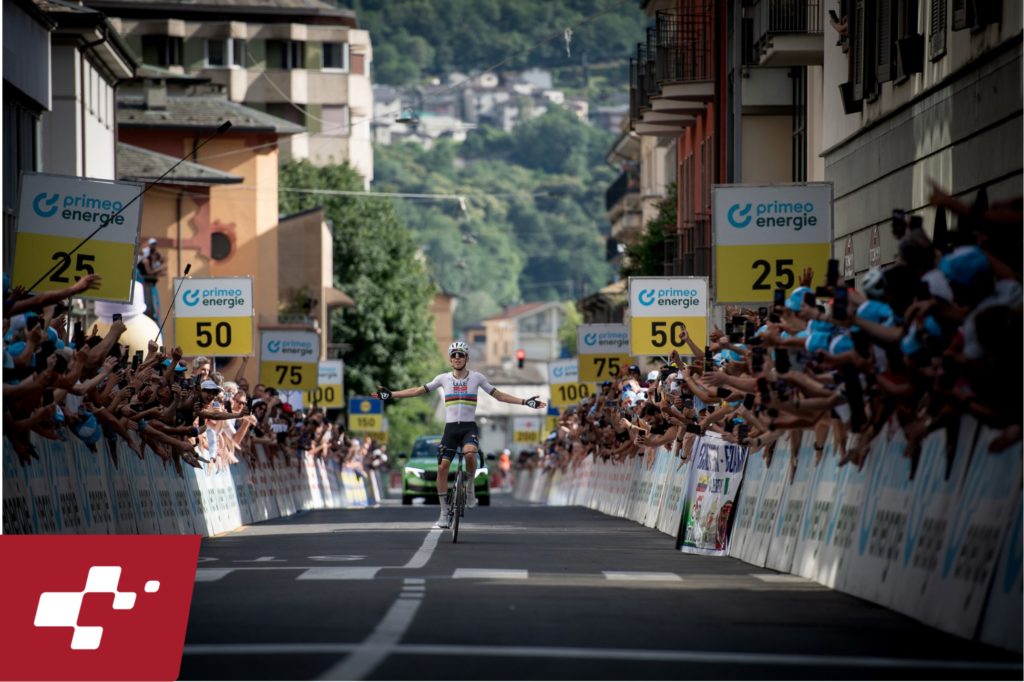
Tour de Suisse, an international stage race at the highest level, entered this year with a major change. For the first time, the men’s race was shortened from eight days to five, while the men’s and women’s races took place on the same day and at the same location throughout the event. This meant the media team had two races to cover each day, while also having fewer days overall to achieve its visibility goals.
With the same team working within a more concentrated schedule, the media team needed a media workflow that could handle more content each day without compromising quality. To support this objective, Tour de Suisse partnered with Content Stadium during this summer’s stage race.
The impact was clear. By connecting how content was organised, created and shared, the new workflow gave the media team the capacity to handle the higher daily content load, maintain quality across both races and make more of every race day for fans and sponsors.


The biggest value is working more efficiently during the event. We can find and share the right content faster with partners and broadcasters, focus on the most relevant content and post it at speed in a busy event environment.
Philipp Avenell
Digital Marketing Manager, Tour de Suisse
The challenge
Tour de Suisse generates thousands of photos and videos in just a few days. Those assets need to be collected and organised quickly, turned into content as the race unfolds and delivered to the right people on time. With two races taking place each day and the event condensed into five days, the 2026 format put even more pressure on the media team.
They needed to:
- collect and organise photos and videos from photographers, influencers and other content creators when every minute mattered.
- create live stats content immediately after the event while the conversation was still happening on social platforms.
- deliver relevant sponsor content quickly to more than 15 partners.
- share the latest race content with more than 170 journalists and media partners.
The solution
During the race, the media team brought asset management, content creation and distribution into one connected workflow. Riders, teams, sponsors and photographers were also included in one ecosystem to reduce friction and work more efficiently. This gave everyone involved a clearer and more efficient way to move content through the event.
In practice, this came together across four key areas:
1. Easy asset ingestion and AI-powered management
Photographers and other contributors sent assets directly to Tour de Suisse using FTP and external upload links. The media team received all photos and videos in a single media library and immediately organised them with AI tagging by riders, teams and sponsor logos.
2. Fast social media content creation at race speed
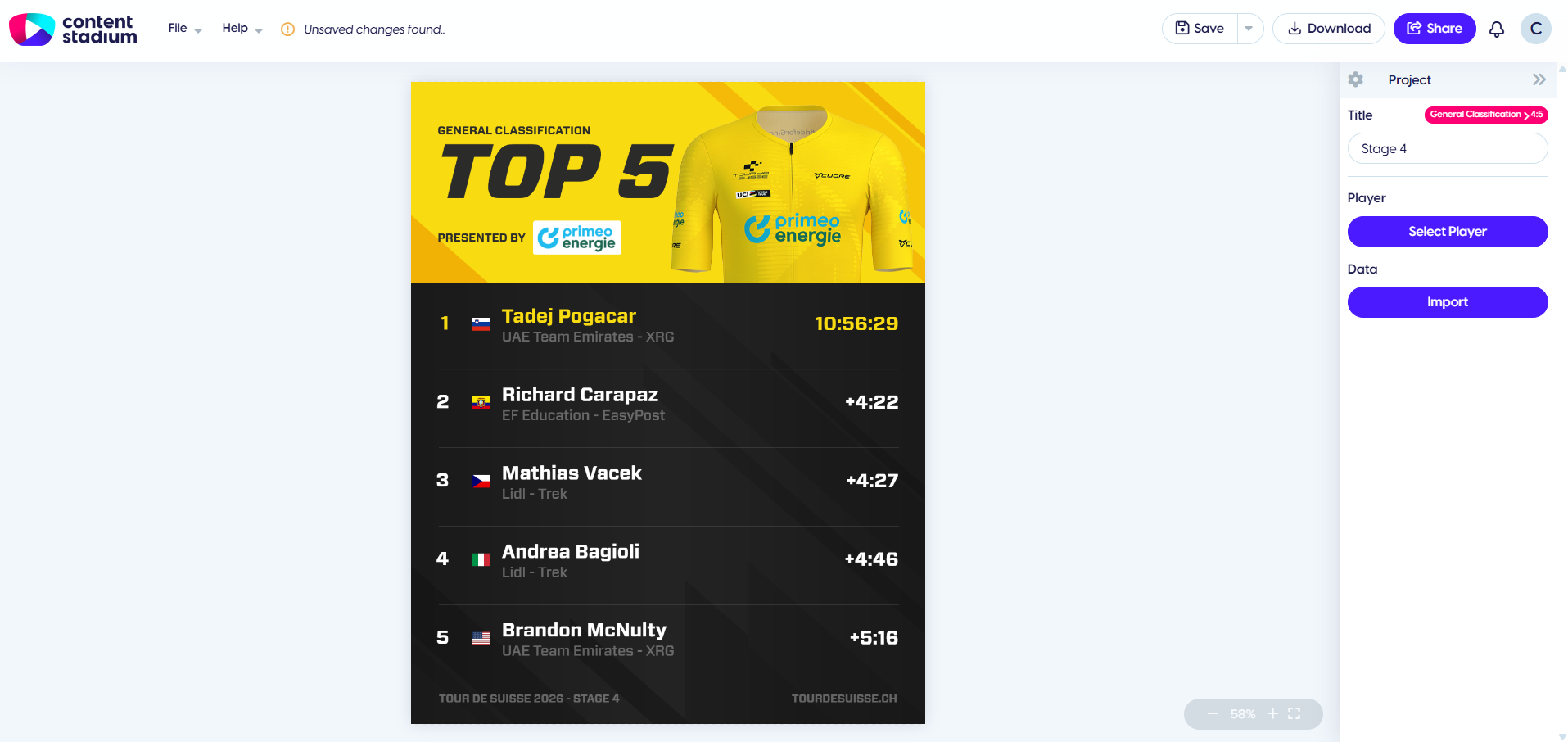
Tour de Suisse used a suite of content creation tools to create high quality and unique content during the stage race at speed. Content creation was connected with live race data to create everything from classification graphics to race updates based on live results. For video clips and highlights, Tour de Suisse could also produce localised versions for different regions and audiences, increasing its international visibility.
3. Automated sponsor delivery
AI automatically recognised sponsor logos in incoming photography and tagged the relevant assets accordingly. Sponsor content could then be added to dedicated galleries, giving partners fast access to the assets they needed without the media team having to manually search, select and distribute every asset.This made sponsor delivery faster and easier throughout the event.
4.Automated broadcast & media delivery
As new assets became available, the broadcast and media library was also continuously updated with the latest race content. This gave broadcasters, journalists and other media partners faster access to the assets they needed, while reducing manual distribution work for the Tour de Suisse team.
Impact in numbers
The impact was clear in the numbers. Tour de Suisse created more content in less time, increased daily engagement and delivered greater value for sponsors.
1. More content in less time
Tour de Suisse created 44% more posts this year, despite having 37.5% fewer race days. With more activity concentrated into each day, the team was able to turn that pressure into more content and make more of every race day.
2. Stronger daily engagement
By using a suite of creation tools, Tour de Suisse created content quickly and became an immediate source of discussion and engagement on social media. Compared with last year, Tour de Suisse’s engagement rate per day increased by 74.4%.
In sport, timing matters. Posting unique content at the right moment is essential for event organizers.
3. More value for sponsors
During the event, Tour de Suisse delivered more than 500 sponsor images and created five live sponsor galleries. The team improved partner content delivery, making it faster, more accurate, and more scalable. Tour de Suisse was able to activate brands not only on the race track but also across the digital landscape. This created stronger foundations for future sponsorship activation and commercial opportunities.
Not ready yet? Read our most successful stories below:
- Learn how Team Visma | Lease a Bike creates branded social media visuals in minutes with Content Stadium.
- Discover how SPORT1 creates 5 times more graphics per day with Content Stadium, compared to Photoshop.
- Read how the European Handball Federation reduced manual work & increased outputs with Content Stadium.